Building a Precision Search Engine Without Vectors: A Practical Approach for SAP Commerce Cloud
October 1, 2025

Search technology has entered a new era with the rise of vector embeddings and neural retrieval models. While these approaches offer powerful capabilities, they also introduce complexity, resource overhead, and opaque debugging challenges. At HybrisArchitect.com, we recently implemented a multilingual, natural language–friendly search engine that focuses on PDF document retrieval, integration with SAP Commerce OCC APIs, and a company’s website FAQs. Interestingly, we achieved strong performance using traditional Solr-based search without vector embeddings.
One of the impetuses for this article was noticing that many websites providing product specifications in PDF format do not make these files searchable. To address this observation, we downloaded over 300 different PDF product specification sheets to build our search index. The results have been encouraging, demonstrating that structured, deterministic search can deliver precise outcomes across large document collections.
This article explores why a deterministic, vectorless approach can be not only sufficient but also highly effective for many enterprise commerce use cases.
In regulated and commerce-heavy environments, reproducibility and explainability matter. With a vectorless Solr implementation:
Through experimentation, we found that:
To conduct the search, we connected the data sources to a chatbot and queried the term: ‘What are Sheathing installation instructions?’
The query was executed over 300 construction-related PDF product specification sheets, entirely without embeddings and without fine-tuning. Despite this, the search engine delivered precise, formatted results that were easy to follow and included proper citations.
Chatbot Output Example:
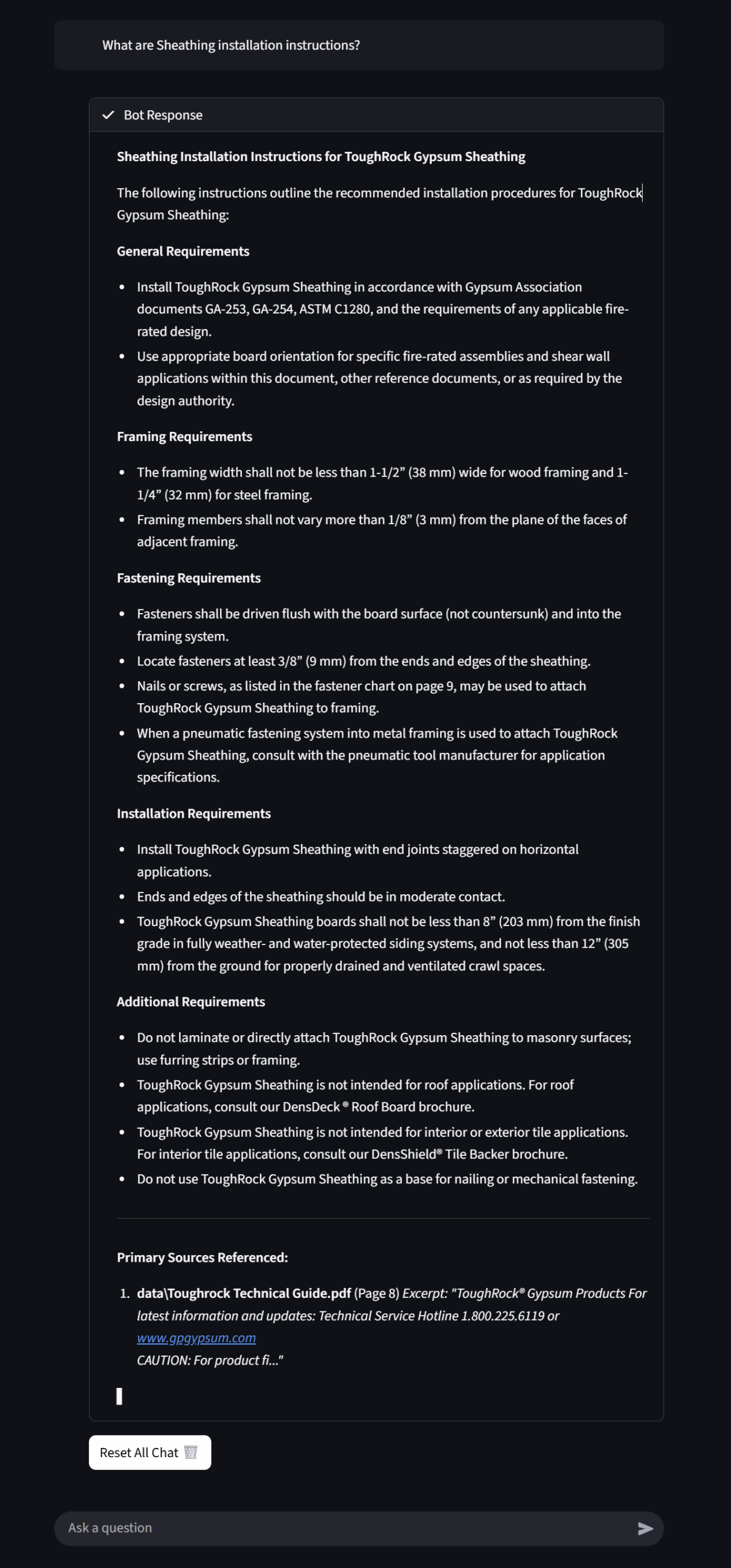
As you can see, the returned message format was improved for readability and user experience. Results were presented with clarity, making them easier to interpret, and the sources were cited at the bottom of the response.
Original PDF Source:
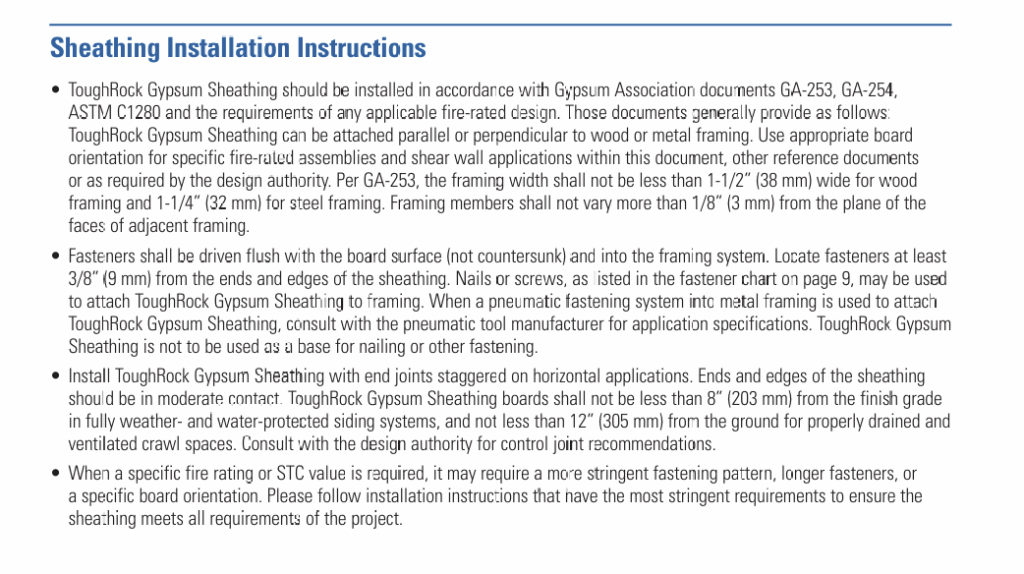
Below is the original PDF source, which contains the installation directions in a slightly hard-to-follow format. The chatbot reformatted the response in a much more intuitive way while maintaining the integrity of the original source.
This case study highlights that deterministic Solr search, combined with thoughtful output formatting, can deliver production-grade accuracy for specialized document queries.
While vectors and hybrid retrieval approaches dominate current discussions, our experience demonstrates that vectorless Solr search remains a powerful, precise, and enterprise-ready option. For scenarios where explainability, performance, and deterministic results are key—such as SAP Commerce product catalogs, PDF-heavy documentation, and FAQs—traditional approaches still shine.
At HybrisArchitect.com, we’ll continue exploring innovative but pragmatic search strategies that deliver measurable business value without unnecessary complexity.
If you would like to see a demo or explore how this approach could work within your organization, please reach out to us at info@localhost.

Marc is the Founder of HybrisArchitect.com.
He enjoys helping others learn more about SAP Commerce Cloud (Hybris). Marc is a SAP Commerce Certified Professional and has held the role of SAP Commerce Cloud Architect at Deloitte, PwC, Brillio (a Bain Company), and Nasty Gal. Marc holds an M.S. Software Engineering from Carnegie Mellon University and a B.S. in Accountancy from California State University, Fresno. He can be reached at: mraygoza@localhost